

 Answering the Call
The United Nations Environment Program estimates that between 150 and 200 species of life are going extinct every 24 hours and predict that one-quarter of all mammal species will disappear forever in the next 30 years. Many biologists believe that human development and climate change are not just wiping out species at record rates, but threaten entire "theaters of evolution" -- functioning natural ecosystems that are needed to regenerate biological diversity. Given the magnitude of the crisis and the fact that zoos worldwide annually receive over 600 million visitors (over 100 million visitors in the U.S. alone), many of these zoos are realizing that they must play a larger, much more effective, role to protect animal populations and habitat in the wild. The proposed media are intended to further encourage the participation of zoos, zoo visitors, government agencies, NGOs and the public.
Answering the Call is a documentary film series that examines the response of zoos to an accelerating, global extinction crisis. As scientists better understand the needs of captive and wild animals alike, many zoos are shifting away from the passive-entertainment model to become more empowering expositions that not only impart a more acute ecological awareness, but also help protect endangered animal populations in the wild. The film will examine zoo exhibits that effectively convey the importance of protecting wild habitat and of fostering the kind of local economic development that allows for long-term protection. The filmmakers will also travel to nature preserves and development projects in Africa, Asia and Central America where zoos are playing a vital role in saving the wilds. Answering the Call includes a two-part PBS documentary series, a version for international distribution, and educational shorts for institutional usage. Our target date for broadcast is summer of 2012, the 20th anniversary of the Convention on Biological Diversity.
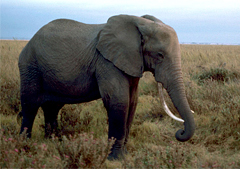
Beginning with an historic reaction to the slaughter of North American bison, we'll consider key events both large and small that have shifted the thinking of zoologists and zoo architects about the role and responsibilities of zoos. We'll consider the story of Jumbo, an African elephant sold in 1882 to P.T. Barnum after years of being a top draw at the Paris and London Zoos. We'll present archival footage of Willie B, the beloved silverback gorilla at Zoo Atlanta that was released into an outside exhibit, allowed to socialize and raise a family after spending 27 years in an enclosure of concrete and heavy bars.
We'll consider the ongoing debate between zoo critics and zoo advocates who speak to the vital role zoos must play to address the current wave of extinctions, a crisis driven by human development. After considering the successes and limitations of captive breeding programs intended to repatriate endangered species to the wild, we'll examine pioneering new measures that not only educate, but also allow zoo visitors to get involved in protecting the wilds.
Commentators include zoo directors and staff, zoo visitors, world-renown zoologists, conservation biologists, zoo architects, and animal psychologists. Locations include Zambia, Mozambique, India, Belize, the Bronx Zoo (Wildlife Conservation Society), Arizona Sonora Desert Museum, San Diego Zoo, the National Zoo, Oregon Zoo, Zoo Boise, London Zoo, Jersey Zoo UK (Durrell Wildlife Conservation Trust), Zurich Zoo, Emmen Zoo (Netherlands) and the Frankfurt Zoo (Germany).
Part Two:
Part Two of Answering the Call will focus on the efforts of zoos to reach far beyond their fences to develop long-term, successful biological preserves and parks in the wild, projects with the best chances of succeeding because they provide economic benefits to local people living in and around these endangered areas. Our film crew will visit parks in three regions of the world (Asia, Africa, and Central America) that are home to at least one endangered "charismatic mega-fauna" and anchor a diverse array of other endangered life forms, both plant and animal -- places that show the vital connection between wildlife and habitat. These stories will focus on the dramatic efforts of staff and scientists to counter ongoing, serious threats including deforestation, poaching, industrial mining and climate change.
India: Of the 3,200 tigers that still exist in the wild (worldwide), only 1,000 are breeding females and most are in India. We will visit locations considered "last chance" breeding areas in India's Western Ghats region (Nagarahole National Park) where the Wildlife Conservation Society (Bronx Zoo) and tiger expert K. Ullas Karanth are involved in last-ditch efforts to protect these vital source sites. The project is modeled after successful efforts in the 1980's to protect African rhinoceros populations, another species with high commercial value for poachers that was saved only when protection efforts focused on small and medium-sized breeding areas.
Zambia & Mozambique: Many species commonly seen in zoos and listed as critically endangered are from the forests and savannahs of central and southern Africa. In Zambia we will visit the Luangwa National Park where the Frankfurt Zoological Society and the Wildlife Conservation Society (WCS) are working with local biologists to protect species including birds, hippos, black rhinos, elephants, giraffes and lions. This segment will also include a close look at the Community Markets for Conservation Project (COMACO), a WCS project that has helped develop environment-friendly livelihoods in communities surrounding the preserve. In Mozambique we will document work being done with the support of the Boise Zoo to restore wild animal populations and habitat in Gorongosa National Park, a region called "the place where Noah left his ark" by its Portuguese founders that was later decimated by civil warfare in the 1980s.
Belize: Species endangered by habitat loss and climate change also live in marine environments -- such as sea turtles, corals, and the countless fish species that depend on a healthy ocean and coastal environment. Off the Caribbean coast of Belize we will visit Glover's Atoll, a stunningly beautiful part of the Mesoamerican Reef where a Wildlife Conservation Society research station is monitoring the increasing acidity of ocean water caused by the absorption of greenhouse gases like CO2 -- a change that can kill living corals and threatens one of the most productive, diverse ecosystems on earth.
Habitat Media has produced several award-winning documentaries including primetime PBS Specials like Empty Oceans Empty Nets and Farming the Seas; films that communicate the importance of citizen participation and show viewers exactly what they can do to help solve a seemingly overwhelming problem. Our films have screened before U.S. Congressional Committees, the United Nations, White House staff, and in federal judges' chambers. Short versions are ongoing exhibits at marine aquaria and natural history museums. They are also educational resources used by hundreds of high schools and colleges.
Your support is needed! Habitat Media is a 501(c)(3) non-profit production group. We are seeking start-up funds for Answering the Call
Please contact Steve Cowan at 503-227-3756 to find out how you can help!
> See our other projects.
copywrite (c) 2011 Habitat Media